
Liberation in Between: To Belong and Not to Belong


When I was at the lowest point of my life, going through a divorce and feeling utterly empty, my therapist said something that stuck with me: “If you had even one quality relationship, you wouldn’t have ended up here.” The comment made me angry. I’d had more than one—at least a few—but I’d lost them along the way.
Determined to resurrect one of those relationships, I bought a ticket to visit my best friend of 20 years, someone I’d recently reconnected with after years of silence. Staying with her and her son for 10 days felt like stepping into warmth after being out in the cold for far too long. The time we spent together was so nourishing that we planned another trip, this time with another old college friend and his partner, to the Dolomites.


One promise we made for the trip was to go snowboarding once or twice. True to their word, we ended up at the Carezza ski resort. On one of the tram rides up a slope I’d ridden before, something caught my eye—a story scattered across the interiors of the tram cars. It was the legend of Lake Carezza, told in fragments, like a broken rainbow hidden beneath the lake’s frozen winter surface.
The lake’s magical iridescent hues are a remnant of the Masaré wizard’s broken spell—a failed attempt to capture the heart of a nymph. Somehow, the rainbow carries the echoes of the dream realm, connecting lovers' desires and opening fleeting windows of hope, as if to dissolve the ache of longing.
With the sorceress's help, the wizard harnessed his magic to create a lasting rainbow, seeking the fabled connection that lovers, dreamers, and Kermit yearn for in wistful song about the elusive "rainbow connection." Yet, he faltered in interpreting the sorceress’s guidance—her suggestion to disguise himself was not a call to mere concealment which he totally forgot instead devoting himself in service of non invited love, but a deeper invitation to transformation through patience.
What once seemed unattainable could have become a monument of transcendent beauty, a rainbow that graced the sky through all seasons instead of sinking beneath the lake’s depths in a moment of anger. Such a creation would unlock the longing of many who search for its secret, as Kermit poignantly wonders, “Why are there so many songs about rainbows and what’s on the other side?”
Metaphorically, that patience and trust in the process mirrored what I was grappling with during that trip—the patience to embrace my personal transformation and the trust that love in relationships could endure the winds of change and the sudden unfamiliarity life introduces. My dynamic with my best friend, who had pulled me out of darkness just months before, was evolving. I sensed her shock at the changes in me, but I couldn’t comfort her by reverting to my old self. Instead, I had to trust that the love between us would eventually settle the dust into acceptance.
One evening, we found ourselves in a heated discussion about the role of time in moving on from a broken relationship. We debated the interplay of science, logic, and emotion, as if channeling the spirit of Omar Khayyam—the renowned scientist, philosopher, and poet. In his poetry, Khayyam often celebrated the fleeting nature of life in his Rubais, urging us to savor the present moment, for the next breath is never guaranteed.
During the trip, an adapted Rubai from Fitzgerald entered the conversation. Interestingly, our friend’s partner was quick to reference the original poem which I failed to do after spending a day to go through all of the Rubais:
'If this wine you drink and the lip you press,
End in what begins and ends in yes,
Then think you are today what yesterday you were,
Tomorrow shall not be less.'
The exchange illuminated the delicate tension between seizing the present and holding on to the care once felt in past relationships—a theme that lingered with me throughout the journey. Yet, I came to firmly believe that breaking completely free from that care, even if it persisted, was essential to fully embrace who I am today.
In another rubai, Khayyam likened humans to celestial bodies wandering through the vast universe, a perspective practiced through his studies in astronomy, mathematics, and philosophy:
'The wheel of the universe, in which we are lost,
We see as a metaphor for a lantern of imagination.
The sun is the lamp, and the universe its lantern,
We are like constellations wandering within, perplexed.'
Attachment to the past, especially care that no longer holds the potential to change, evolve, or fade, limits the ability to fully embrace the wonder of the present and the boundless possibilities of the future. Khayyam’s reflections emphasized the importance of rational inquiry, suggesting that true satisfaction in life arises not only from savoring each moment but also from elevating those moments through reason and understanding.
In my view, time alone doesn’t heal wounds. Instead, each person must tap into the mental wisdom and cultivate shifts in perspective to truly comprehend their emotional states as they evolve over time. Healing requires both embracing emotions as they exist in the moment and seeking ways to transform them into something more effective and fitting for the next.
As I argued, I began to realize that, in a way, I was reminding myself of something deeply significant. While I had worked through the brokenness of my marriage without relying on time alone to heal the wounds, I recognized that some wounds in my relationship with my best friend still lingered, untouched by time’s passage. This became painfully clear in fleeting moments when I unintentionally blurted out hurtful words before catching myself. In those instances, I paused, allowed myself to honor the emotions I was experiencing, and fully embraced the depth of hurt I felt. I chose to sit with that pain, letting it guide me toward the next step in our relationship.
As I reflected, I realized that true healing required embracing the process of change, guided by philosophical rations and self-awareness—even if it felt like trying to mend a once-strong bond now as fractured as the broken rainbow over Lake Carezza. To remain true to myself and the path I was on, I understood that a new dynamic was necessary, one that aligned with my evolving needs. All I could do was hope my friend would respond positively to the change.
We continued our trip, enjoying good wine, games, and laughter, but something had shifted—a subtle yet palpable distance had taken root. Though I felt more at peace within myself, the once vibrant and dreamy connection had entered a quiet period of turmoil and space.
As we strolled through a Christmas market in Bolzano, I adhered to my ritual of buying jewelry as a keepsake from the places I visit. We discovered a small shop where rings of various shapes and colors were artfully displayed. The arrangement left a deliberate open space between two sides, reminiscent of the legend of Lake Carezza—a reflection of beauty fractured by longing and unfulfilled harmony.
I tried on several combinations, drawn to pieces that reflected my own preferences. Yet, without hesitation, my best friend and our friend’s partner unanimously picked one for me: two small freshwater pearls on one side and a larger blue quartz stone on the other. Though it wasn’t my first choice, I decided to go with their unwavering selection, feeling the weight of their choice as part of the moment’s meaning.
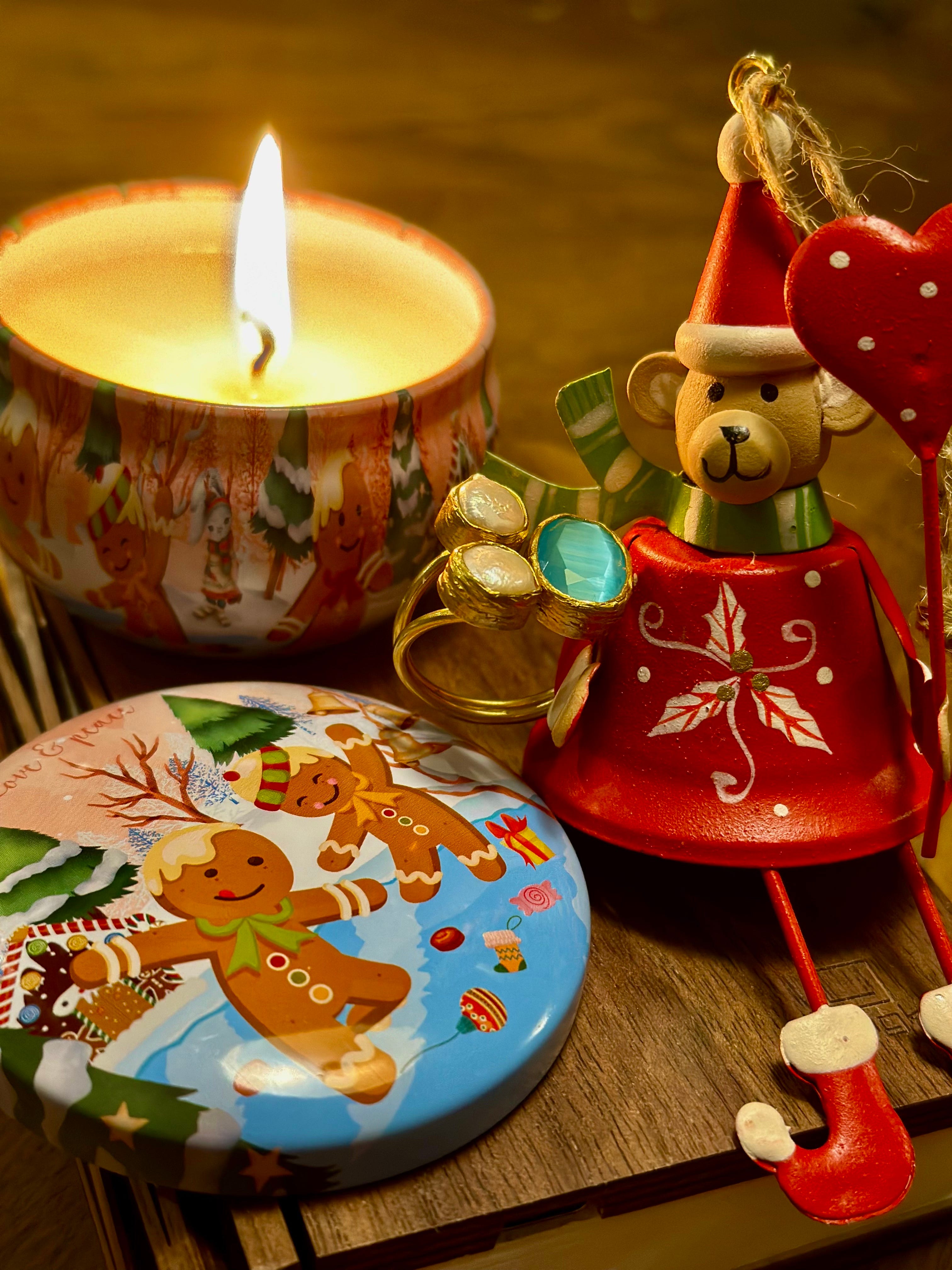
The next day, I asked our friend’s partner why she had chosen that specific combination, and her answer was simple—just a gut feeling. It struck me how, even amidst surface-level disagreements, we often intuitively pick up on each other's emotional state through our choices. They both sensed that I was struggling to balance love with freedom, and that I needed a grounding force to stay true to that balance. What I needed was patience—patience to see how freedom could lend an ethereal hue to new love, one that was anchored in my emotions, supported by ration, and, hopefully, brings forward new friendship grounded in understanding.
It was that very neglect of freedom that had led the wizard to fail in capturing the nymph’s heart and unlocking the mystery of the rainbow connection. The strength of the rainbow came not from earthly effort alone, but from embracing the freedom to shape it from within—just as the wizard’s rainbow drew its power from the effort to create something transcendent from earthly stones but failed to make it eternal through honoring freedom.